
A Unified Namespace (UNS) in medical device manufacturing connects production, quality, and environmental data into a single real-time data layer. UDI traceability, sterilization records, and cleanroom monitoring are already managed by quality management systems (QMS), sterilization equipment, and environmental monitoring systems. Rather than replacing these systems, the Unified Namespace brings their data together in real time, making it available at the device and batch level throughout the manufacturing process. This enables manufacturers to meet regulatory requirements such as the EU Medical Device Regulation (MDR) and 21 CFR Part 11 more efficiently, without relying on manual data consolidation from PLCs, MES, and QMS.
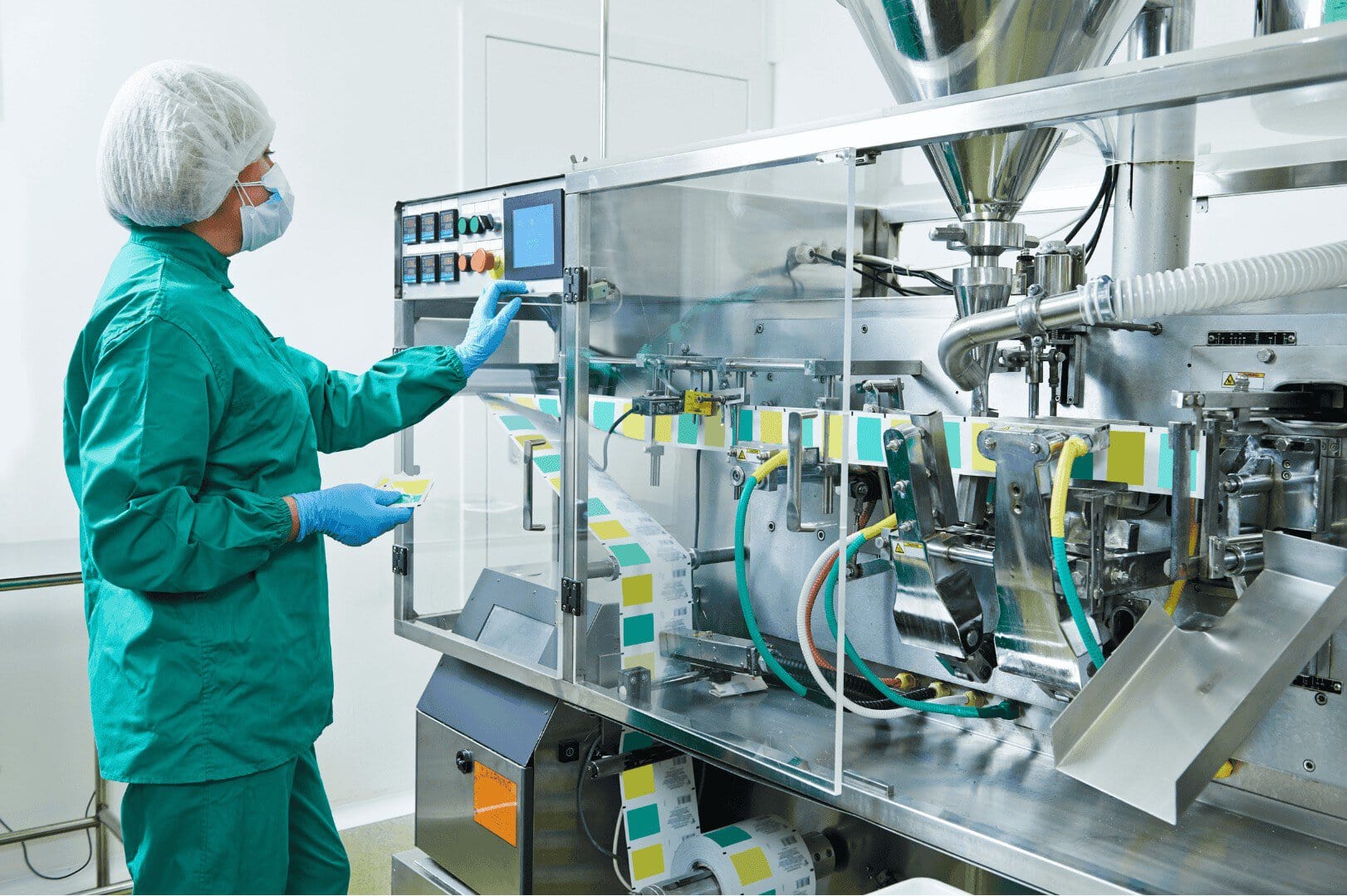
This article shows what sets a Unified Namespace in medical technology apart from a generic manufacturing architecture. It covers industry-specific use cases for AI and digital twins, plus concrete best practices. For the technical fundamentals of a UNS itself, see What Is the Unified Namespace (UNS)?
Unified Namespace Requirements in Medical Technology
Digitalization projects in medical technology operate under regulatory pressure that goes beyond generic manufacturing requirements. The following drivers determine how data needs to be modeled, stored, and evaluated.
Regulatory Drivers: ISO 13485, FDA 21 CFR 820, EU MDR, and 21 CFR Part 11
ISO 13485 requires a documented quality management system that makes every manufacturing step traceable. The FDA regulation 21 CFR 820 was harmonized into the Quality Management System Regulation (QMSR) in 2024. Together with the EU Medical Device Regulation (MDR) 2017/745, it requires unique device identification through the UDI. A UDI consists of two parts. The Device Identifier (DI) fixes the identity of a catalog model. The Production Identifier (PI) carries the serial number, manufacturing date, and expiration date of a specific device. This means the UDI identifies a single device, not a group of units. IEC 62304 and ISO 14971 add requirements for software lifecycle and risk management. Finally, 21 CFR Part 11 requires that electronic records and signatures be tamper-evident, timely, and fully traceable under the ALCOA+ principle.
Why Medical Technology Manufacturing Differs From Other Industries
The food industry tracks products at the batch level, the automotive industry at the component level. Medtec manufacturing combines both, but more strictly. Every single device carries its own, globally unique identity through its UDI. That’s comparable to pharma serialization under DSCSA or EU-FMD. On top of that come two events specific to this industry: sterilization and cleanroom environmental monitoring. A sterilization cycle typically processes an entire load of multiple devices at once. It uses ethylene oxide (EtO) or gamma irradiation, for example, and must be verified through a biological indicator. Cleanroom conditions like particle count or microbial load, by contrast, are monitored continuously, regardless of which device happens to be in the room. These properties shape how a Unified Namespace in medical technology needs to be modeled. UDI, sterilization cycle, and cleanroom data are separate data objects, each with its own granularity.
Medtec Topic Structure
In a Unified Namespace in medtec, the physical hierarchy stays stable: plant, line, equipment, measurement. It doesn’t change with whichever device is currently being manufactured. This follows the same ISA-95 principles as in MQTT Topic Namespace Best Practices. What’s industry-specific here isn’t the topic hierarchy itself, but where UDI, sterilization, and cleanroom data get stored in the UNS.
Typical topic hierarchy, independent of the device:
tuttlingen/line03/cleanroom/particle-count/actualtuttlingen/line03/cleanroom/particle-count/status
Device and process events, on the other hand, get their own one-off topics:
tuttlingen/line03/device/SN20260718-0045/dhrtuttlingen/line03/sterilization/eto-2026-07-18t06-30/cycle-record
This data model has three medical-device-specific properties:
- Cleanroom particle measurement stays independent of the device: a particle counter publishes continuously on a fixed topic, with no UDI in the path. Unlike a batch, the room air doesn’t belong to a single device. It belongs to the entire cleanroom at a point in time.
- A sterilization cycle typically processes several devices at once as a load. It gets its own timestamped topic, with the serial numbers involved carried in the payload.
- The Device History Record, by contrast, is inherently per device. It’s tracked by serial number in the topic, because every device carries its own, immutable history.
The following use cases trace this structure through one continuous example device: an implantable pacemaker, serial number SN20260718-0045, Tuttlingen plant, Line 3.
UNS Use Cases in Medical Technology
The following use cases show how this data model pays off in practice. They range from classic UDI traceability to AI-driven insights and digital twins.
Device History Record (DHR) and UDI Traceability
Reconstructing DHR data after the fact from MES, lab, and QMS exports takes time. The Unified Namespace instead delivers a device’s complete history in real time. Component lots, process steps, sterilization records, and release status are all linked directly through the UDI. An audit under ISO 13485 requires the complete manufacturing record of a single device. That becomes a query instead of a manual research project.
Topic: tuttlingen/line03/device/SN20260718-0045/dhr
JSON Payload:
{
	"udiDi": "04056789012348",
	"udiPi": {
		"serialNumber": "SN20260718-0045",
		"manufacturingDate": "2026-07-18",
		"expirationDate": "2029-07-18"
	},
	"product": "Implantable Pacemaker Model X200",
	"componentLots": [
		{
			"component": "Battery Cell",
			"supplierLot": "BAT-LOT-88231"
		},
		{
			"component": "Header Assembly",
			"supplierLot": "HDR-LOT-44210"
		}
	],
	"processSteps": [
		"assembly",
		"functional_test",
		"sterilization",
		"packaging"
	],
	"productionSite": "plant-tuttlingen",
	"productionLine": "line03",
	"startTime": "2026-07-18T02:10:00Z",
	"endTime": "2026-07-18T04:45:00Z",
	"status": "released",
	"iso13485Record": "dhr_entry"
}
Sterilization Cycle Monitoring and Sterility Assurance Verification
The chamber controller already evaluates gas concentration, temperature, humidity, and duration locally against the validated cycle recipe. The biological indicator, however, gets incubated externally and often doesn’t return its result as a separate lab report until one to three days later. A rule in the UNS automatically links this delayed BI result to the already-completed chamber cycle and only then flags the load as finally passed or failed, instead of reconciling chamber log and lab report by hand. The sterility assurance record for the next audit is generated without manually merging these separate sources afterward.
Topic: tuttlingen/line03/sterilization/eto-2026-07-18t06-30/cycle-record
JSON Payload:
{
	"sterilizationCycleId": "ETO-20260718-0630",
	"method": "ethylene_oxide",
	"devicesInLoad": [
		"SN20260718-0045",
		"SN20260718-0046",
		"SN20260718-0047"
	],
	"phases": [
		{
			"phase": "preconditioning",
			"durationMin": 60,
			"humidityPercent": 55,
			"temperatureC": 45
		},
		{
			"phase": "gas_exposure",
			"durationMin": 240,
			"eoConcentrationMgL": 600,
			"temperatureC": 45
		},
		{
			"phase": "aeration",
			"durationHours": 12,
			"temperatureC": 40
		}
	],
	"biologicalIndicatorResult": "negative",
	"sterilityAssuranceLevel": "1e-6",
	"cycleResult": "passed",
	"approvedBy": "system-auto",
	"timestamp": "2026-07-18T18:30:00Z"
}
Cleanroom and Environmental Monitoring
Particle counters and microbial air samplers in the cleanroom publish continuously under a fixed sensor address in the UNS. If a reading exceeds the ISO 14644 classification limit, it’s immediately clear which steps took place during that window. It’s also clear which devices could be affected.
Topic: tuttlingen/line03/cleanroom/particle-count/actual
JSON Payload:
{
	"sensorId": "PARTICLE-ISO7-ROOM3",
	"cleanroomClass": "ISO_7",
	"particleCount_0_5um": 8200,
	"particleCount_5um": 25,
	"limit_0_5um": 352000,
	"limit_5um": 2930,
	"status": "within_limits",
	"timestamp": "2026-07-18T10:00:00Z"
}
AI Use Cases in Medtec
AI use cases for a Unified Namespace in medtec need context, not just data. Their value comes from linking process, lab, and environmental data together, not from generic anomaly detection.
Bioburden Risk Assessment Before Sterilization
A model links bioburden trend data from the lab with component data from the UNS. It flags loads with elevated bioburden risk before sterilization even happens, so QA can pull targeted additional samples. A load is still released exclusively through the validated cycle and the biological indicator — the model replaces neither of these records.
Topic: tuttlingen/line03/ai/bioburden-risk/ETO-20260718-0630
JSON Payload:
{
	"sterilizationCycleId": "ETO-20260718-0630",
	"model": "bioburden-risk-v1.4",
	"devicesInLoad": [
		"SN20260718-0045",
		"SN20260718-0046",
		"SN20260718-0047"
	],
	"bioburdenRiskScore": 0.18,
	"riskLevel": "low",
	"contributingFactors": [
		{
			"source": "component_lot_history",
			"factor": "battery_lot_bioburden_trend_cfu",
			"value": 45
		},
		{
			"source": "environment",
			"factor": "cleanroom_particle_trend_deviation_percent",
			"value": 1.8
		}
	],
	"recommendation": "standard_bi_sampling_sufficient",
	"replacesBiologicalIndicator": false,
	"timestamp": "2026-07-18T05:00:00Z"
}
Sterilization Cycle Anomaly Detection
Instead of relying on fixed thresholds, a model evaluates gas concentration and duration together. It estimates the actual impact on every device in the affected load, not just a single unit.
Topic: tuttlingen/line03/ai/sterilization-anomaly/ETO-20260718-0630
JSON Payload:
{
	"sterilizationCycleId": "ETO-20260718-0630",
	"devicesInLoad": [
		"SN20260718-0045",
		"SN20260718-0046",
		"SN20260718-0047"
	],
	"anomaly": true,
	"parameter": "eo_concentration",
	"deviationPercent": 8.5,
	"durationMin": 22,
	"estimatedSterilityImpact": "requires_biological_indicator_review",
	"recommendation": "quarantine_load_pending_bi_result",
	"timestamp": "2026-07-18T14:10:00Z"
}
Digital Twin in Medical Technology
The digital twin in the Unified Namespace becomes especially valuable once it integrates device-specific sterilization and cleanroom data alongside equipment parameters.
Sterilization Cycle Twin
The digital twin simulates gas concentration and aeration duration before a new cycle parameter gets approved. That way, the achievable sterility assurance level can be validated without risking a real load.
Topic: tuttlingen/line03/twin/sterilization/simulation
JSON Payload:
{
	"simulationId": "SIM-ETO-2026071801",
	"method": "ethylene_oxide",
	"scenario": "reduced_aeration_time_test",
	"input": {
		"gasExposureMin": 240,
		"aerationHours": 10
	},
	"predictedSterilityAssuranceLevel": "1.5e-6",
	"requiredSal": "1e-6",
	"result": "sufficient",
	"recommendedForLiveOperation": false,
	"timestamp": "2026-07-18T00:30:00Z"
}
Cleanroom and Line Qualification Twin
For layout changes or new workstations, the twin simulates the impact on particle count and air change rate. This happens before the cleanroom is physically rebuilt.
Topic: tuttlingen/line03/twin/cleanroom/qualification
JSON Payload:
{
	"simulationId": "SIM-CLNRM-2026071802",
	"scenario": "additional_workstation_layout_test",
	"input": {
		"additionalOperators": 2,
		"newEquipmentHeatLoadW": 450
	},
	"predictedParticleCount_0_5um": 9100,
	"limit_0_5um": 352000,
	"predictedAirChangesRequired": 32,
	"result": "compliant",
	"recommendedForLiveOperation": true,
	"timestamp": "2026-07-17T20:00:00Z"
}
Best Practices for UNS Adoption in Medical Technology
Do
- Model UDI (DI+PI) as a mandatory field: the UDI belongs at the device level. Don’t scatter it as an optional attribute somewhere in the payload.
- Connect the DHR: Only linking manufacturing, sterilization, and test data through the UDI makes a complete Device History Record possible.
- Align audit trails with 21 CFR Part 11: Electronic records must be ALCOA+ compliant, with a timestamp, user ID, and an immutable history.
- Carry calibration status: the calibration status of cleanroom and sterilization sensors belongs in the UNS. That way, audits can trace measurement accuracy end to end.
Avoid
- Keeping UDI only in the ERP, separate from manufacturing events. This makes DHR consolidation harder and turns UDI queries across process data into a chore.
- Leaving sterilization data only on the local autoclave or EtO chamber HMI. Without visibility in the UNS, the sterility assurance record can’t be evaluated centrally.
- Treating connected-device field data as a separate silo: Prevents it from ever being correlated with manufacturing and quality data.
Conclusion
A Unified Namespace in medtec is more than a generic manufacturing architecture with a medical device label slapped on. UDI, sterilization cycle, and cleanroom data are separate data objects that shape the topic structure from the ground up. That’s what makes ISO 13485 audits, 21 CFR Part 11 requirements, and individual device traceability practically manageable. Three key takeaways:
- Industry-specific data modeling comes before general architecture: UDI, sterilization cycle, and cleanroom data are separate fields, not a different broker choice. That’s what sets a Unified Namespace in medtec apart from generic manufacturing architectures.
- AI and digital twins need context, not just data. Their value only emerges from linking a device’s manufacturing, lab, and environmental data, not from generic anomaly detection.
- Regulation is an architecture driver, not a compliance afterthought. ISO 13485, EU MDR, and 21 CFR Part 11 determine which data must exist. They also determine the required granularity and retention period.
Building these industry-specific requirements into the topic structure from day one avoids costly rework later. It also leaves you ready to build AI and digital-twin use cases directly on a solid data foundation.