
Fleet telemetry, gas monitoring, and material certificates have existed in mining for a long time. Every mining vehicle manufacturer ships its own telemetry. Every gas monitoring station triggers independently, and every metallurgical plant issues certificates under EN 10204. A Unified Namespace (UNS) in mining doesn’t replace any of these systems. Instead, it links their data across stages. From the ore block in the mine through beneficiation to the certified metallurgical batch, the data stays connected instead of sitting in separate, often vendor-specific silos.
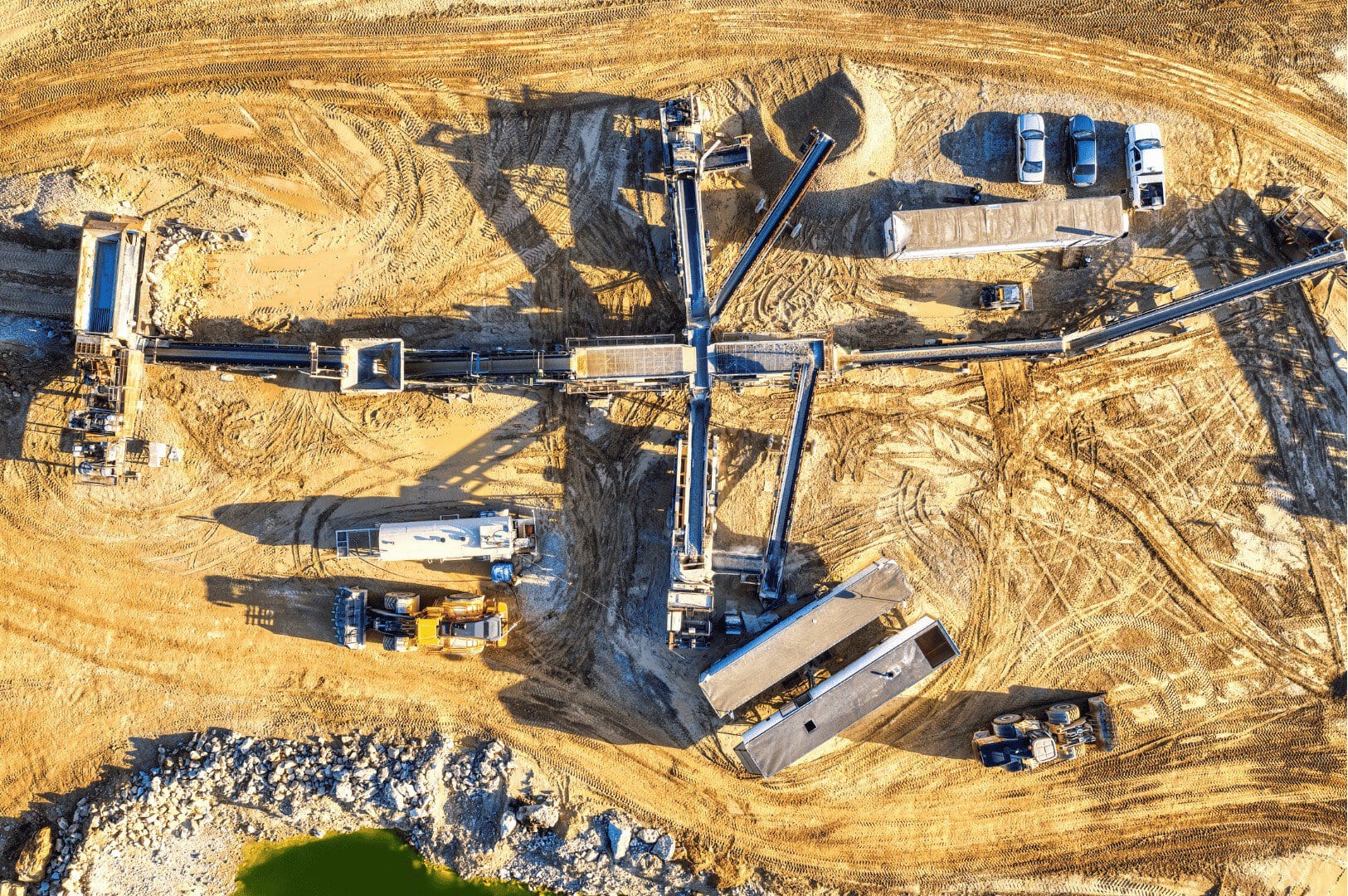
This article shows what sets a Unified Namespace in an integrated mining and metallurgy operation apart from a generic manufacturing architecture. It covers industry-specific use cases for AI and digital twins, plus concrete best practices. For the technical fundamentals of a UNS itself, see What Is the Unified Namespace (UNS)?
Unified Namespace Requirements in Mining
Many mining companies don’t just extract ore. They process it further, within the same group, all the way to a certified metal product. That places requirements on a UNS that go beyond a single process stage.
Conceptual Drivers: Material Certificates Under EN 10204, GISTM, and Mine Safety
Metallurgical products like ferroalloys ship with a material certificate under EN 10204. Depending on customer requirements, that’s either a declaration of compliance (2.2) or an inspection certificate (3.1/3.2). The chemical composition has to be traceable end to end, down to the production batch. The Global Industry Standard on Tailings Management (GISTM), in turn, has required continuous, auditable monitoring of tailings storage facilities ever since the severe dam failures of recent years. Underground, mine safety adds another layer. Gas monitoring and ventilation on demand must work as an independent safety system, separate from the rest of the process control.
These three drivers touch different stages of the same value chain. EN 10204 concerns the finished product. GISTM concerns beneficiation. Mine safety concerns extraction itself.
What Makes an Integrated Mining-to-Metallurgy Chain Technically Different
An ore block passes through three fundamentally different process stages. The mine extracts it as a load, carrying a grade from the geological block model. Beneficiation upgrades it into a concentrate through crushing, grinding, and flotation — a continuous process with a batch-like output. Metallurgy, finally, reduces the concentrate into a certified metal product through a furnace process, in individual heats, each with its own chemical analysis. Each stage has a different traceability unit: load, concentrate batch, heat. A Unified Namespace has to link these three units together so that a material certificate stays traceable, in the end, all the way back to the original ore block.
Mining- and Metallurgy-Specific Topic Structure
In a Unified Namespace in mining, the physical hierarchy stays stable: site, process stage, equipment, measurement. It doesn’t change with whichever load or batch is currently running. This follows the same ISA-95 principles as in MQTT Topic Namespace Best Practices. What’s industry-specific here isn’t the topic hierarchy itself, but where load, concentrate, and heat data get stored in the UNS. Just as important is how they stay linked across stages.
Typical topic hierarchy, independent of the load:
freiberg/mine/level650/ventilation/gas-monitoring/actualfreiberg/mine/level650/ventilation/gas-monitoring/status
Load, concentrate, and heat events, on the other hand, get their own one-off topics:
freiberg/mine/level650/load/LOAD-20260718-0342/load-recordfreiberg/metallurgy/furnace-red3/heat/HEAT-2026-0718-07/certificate
This data model has three industry-specific properties:
- Gas monitoring stays independent of the load. A sensor publishes continuously on a fixed topic, because it covers an entire section of the mine, not a single load.
- Each process stage gets its own traceability unit as a dedicated topic: load in the mine, concentrate batch in beneficiation, heat in metallurgy. Each one is an individually auditable record.
- The link between stages runs through foreign keys in the payload. A concentrate batch carries the load IDs, and a heat carries the concentrate batch IDs. That keeps a material certificate traceable back to the ore block, without nesting the topic hierarchy itself.
The following use cases trace this structure through one continuous example site: the Freiberg plant, mine level 650 with stope S-12, a beneficiation plant, and metallurgical furnace RED-3, producing ferroniobium.
UNS Use Cases in Mining
The following use cases show how this data model pays off in practice, from classic load tracking to AI-driven insights and digital twins.
Ore Load Traceability with Block Model Grade
Every load from a load-haul-dump unit gets its origin from the geological block model directly in the UNS: stope, estimated Nb2O5 grade, and destination. Instead of reconciling the grade after the fact from the geology database and the dispatch log, the information is available immediately for downstream beneficiation.
Topic: freiberg/mine/level650/load/LOAD-20260718-0342/load-record
JSON Payload:
{
	"loadId": "LOAD-20260718-0342",
	"stopeId": "S-12",
	"lhdId": "LHD-07",
	"blockModelGradeNb2O5Percent": 2.8,
	"tonnage": 42,
	"destination": "beneficiation",
	"productionSite": "plant-freiberg",
	"timestamp": "2026-07-18T06:20:00Z"
}
Beneficiation Concentrate Genealogy
A concentrate batch comes from several ore loads that run together through crushing, grinding, and flotation. The Unified Namespace links the load IDs involved directly to the concentrate batch and the recovery achieved. That replaces piecing the link together after the fact from MES and lab exports.
Topic: freiberg/beneficiation/concentrate/KONZ-20260718-A12/genealogy
JSON Payload:
{
	"concentrateBatchId": "KONZ-20260718-A12",
	"inputLoads": [
		"LOAD-20260718-0340",
		"LOAD-20260718-0341",
		"LOAD-20260718-0342"
	],
	"processSteps": [
		"crushing",
		"grinding",
		"flotation"
	],
	"concentrateGradeNb2O5Percent": 58.4,
	"recoveryPercent": 71.2,
	"tailingsBatchId": "TSF-01-20260718",
	"productionSite": "plant-freiberg",
	"status": "released",
	"timestamp": "2026-07-18T14:00:00Z"
}
Metallurgy Heat Tracking and Material Certificates Under EN 10204
A furnace heat consumes several concentrate batches and reductant, producing a certified product with its own chemical analysis. The Unified Namespace carries the consumed concentrate batch IDs directly in the heat record. Through their load IDs, the entire chain stays traceable back to the ore block. The accredited lab still issues the official material certificate. The UNS delivers the end-to-end traceability behind it.
Topic: freiberg/metallurgy/furnace-red3/heat/HEAT-2026-0718-07/certificate
JSON Payload:
{
	"heatId": "HEAT-2026-0718-07",
	"furnaceId": "furnace-red3",
	"inputConcentrateBatches": [
		"KONZ-20260718-A10",
		"KONZ-20260718-A11",
		"KONZ-20260718-A12"
	],
	"reductantLot": "RED-LOT-88231",
	"chemicalComposition": {
		"nbPercent": 65.2,
		"fePercent": 32.8,
		"siPercent": 1.4,
		"alPercent": 0.3
	},
	"en10204CertificateType": "3.1",
	"traceableToOreLoads": true,
	"status": "released",
	"timestamp": "2026-07-18T20:00:00Z"
}
Ventilation on Demand and Gas Monitoring Underground
Gas sensors underground already trigger local ventilation controls on their own, independent of any higher-level process control. The Unified Namespace mirrors gas readings and fan status read-only, so mine safety and operations management share the same view of that section. Safety shutdown logic itself stays entirely within the independent gas monitoring system, and the UNS has no write access to it.
Topic: freiberg/mine/level650/ventilation/gas-monitoring/actual
JSON Payload:
{
	"sensorId": "GAS-S650-04",
	"gasType": "carbon_monoxide",
	"valuePpm": 12,
	"limitPpm": 50,
	"ventilationFanSpeedPercent": 68,
	"monitoringChannel": "independent_safety_system",
	"writeAccessFromUns": false,
	"status": "within_limits",
	"timestamp": "2026-07-18T06:00:00Z"
}
Tailings Monitoring Under GISTM
Piezometers and inclinometers at the tailings storage facility already feed continuous readings into a specialized geotechnical monitoring system. The Unified Namespace additionally brings these readings together with production data from beneficiation, so GISTM risk assessments don’t happen in isolation from process data. The same rule applies here: the UNS only mirrors the safety factor status. It never evaluates it for safety purposes itself.
Topic: freiberg/beneficiation/tailings/tsf-01/status
JSON Payload:
{
	"facilityId": "TSF-01",
	"piezometerId": "PZ-12",
	"porePressureKpa": 145,
	"inclinometerDisplacementMm": 2.1,
	"safetyFactorStatus": "compliant",
	"gistmComplianceStatus": "compliant",
	"writeAccessFromUns": false,
	"timestamp": "2026-07-18T00:00:00Z"
}
AI Use Cases in Mining
AI use cases for a Unified Namespace in mining only deliver value once block model, beneficiation, and metallurgy data are linked together, not through generic anomaly detection.
Cross-Stage Product Quality Prediction
A model links the mineralogy variance from the block model with beneficiation performance and the furnace’s temperature profile, to predict the expected chemical composition of a heat. The official material certificate stays untouched by this. The prediction supports early planning. It never replaces the lab analysis.
Topic: freiberg/ai/product-quality-prediction/HEAT-2026-0718-07
JSON Payload:
{
	"heatId": "HEAT-2026-0718-07",
	"model": "cross-stage-quality-v1.2",
	"predictedNbPercent": 64.9,
	"confidenceIntervalPercent": 0.6,
	"contributingFactors": [
		{
			"source": "block_model",
			"factor": "mineralogy_variance_percent",
			"value": 3.1
		},
		{
			"source": "beneficiation",
			"factor": "recovery_deviation_percent",
			"value": 1.4
		}
	],
	"replacesCertificate": false,
	"timestamp": "2026-07-18T15:00:00Z"
}
Flotation Optimization for Ore Mineralogy Variation
Based on the mineralogy variance of the incoming ore loads, a model recommends reagent dosage within the approved range. Approving that range itself remains the job of process validation, not the model.
Topic: freiberg/beneficiation/ai/flotation-optimization/KONZ-20260718-A12
JSON Payload:
{
	"concentrateBatchId": "KONZ-20260718-A12",
	"model": "flotation-optimization-v1.0",
	"baselineDosageGPerT": 120,
	"recommendedDosageGPerT": 128,
	"approvedRangeGPerT": {
		"min": 100,
		"max": 140
	},
	"predictedRecoveryPercent": 73.5,
	"withinApprovedRange": true,
	"timestamp": "2026-07-18T13:30:00Z"
}
Digital Twin in Mining
The digital twin in the Unified Namespace becomes especially valuable once it integrates cross-stage batch and recipe data alongside equipment parameters.
Flotation Process Twin
The digital twin simulates the expected recovery for a new reagent dosage before it’s actually applied in beneficiation. That way, the dosage change can be validated without risking a real concentrate batch.
Topic: freiberg/beneficiation/twin/flotation/simulation
JSON Payload:
{
	"simulationId": "SIM-FLOT-2026071801",
	"scenario": "increased_reagent_dosage_test",
	"input": {
		"reagentDosageGPerT": 128,
		"oreMineralogyVariancePercent": 3.1
	},
	"predictedRecoveryPercent": 73.5,
	"minRequiredRecoveryPercent": 70.0,
	"result": "sufficient",
	"recommendedForLiveOperation": true,
	"timestamp": "2026-07-18T01:00:00Z"
}
Furnace/Metallurgy Twin
The twin simulates a new reductant recipe before it runs in a real heat. That way, the expected chemical composition can be validated without risking a real furnace run.
Topic: freiberg/metallurgy/twin/reduction-process/simulation
JSON Payload:
{
	"simulationId": "SIM-RED-2026071802",
	"furnaceId": "furnace-red3",
	"scenario": "adjusted_reductant_ratio_test",
	"input": {
		"reductantRatio": 1.15,
		"targetTempC": 1950
	},
	"predictedNbPercent": 65.0,
	"minRequiredNbPercent": 64.0,
	"result": "sufficient",
	"recommendedForLiveOperation": false,
	"timestamp": "2026-07-17T22:00:00Z"
}
Best Practices for UNS Adoption in Mining
Do
- Model load, concentrate, and heat ID as a continuous chain: only foreign keys between the stages keep a material certificate traceable back to the ore block.
- Carry block model grade per load: it belongs at the load level, not added later from the geology database.
- Keep gas monitoring and tailings status visible but isolated: the UNS mirrors both systems without gaining write access to their safety logic.
- Carry calibration status: the calibration status of gas, geotechnical, and process sensors belongs in the UNS, so audits can trace measurement accuracy end to end.
Avoid
- Controlling gas monitoring or tailings safety shutdowns through the UNS: undermines the required independence of these safety systems.
- Leaving fleet telemetry only in the vendor’s own portal: makes it harder to evaluate data across multiple vehicle types and manufacturers.
- Maintaining load ID only in the dispatch system, separate from beneficiation and metallurgy data: turns tracing a material certificate back to the ore block into a manual research project.
Conclusion
A Unified Namespace in mining is more than a generic manufacturing architecture with a mining label slapped on. Its real value doesn’t come from within a single process stage. It comes from linking load, concentrate batch, and metallurgy heat across the entire value chain. Three key takeaways:
- Cross-stage traceability comes before general architecture: load, concentrate batch, and heat are separate traceability units, linked through foreign keys, not through a different broker choice.
- AI and digital twins need context: their value only emerges from linking block model, beneficiation, and metallurgy data, and AI never replaces the material certificate.
- Safety separation is an architecture principle, not a compliance afterthought: the UNS may only mirror gas monitoring and tailings surveillance. That boundary belongs in the architecture from day one.
Building these industry-specific requirements into the topic structure from day one avoids costly rework later. It also leaves you ready to build AI and digital-twin use cases directly on a solid, cross-stage data foundation.